
President:
Dr Sonja Tiernan
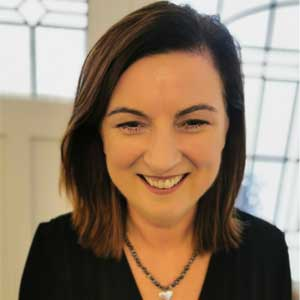
Sonja Tiernan is national coordinator of the Irish Humanities Alliance at the Royal Irish Academy. Formerly Eamon Cleary Chair of Irish Studies at the University of Otago, New Zealand. A graduate of University College Dublin, she has held fellowships at Trinity College Dublin; University of Notre Dame; Concordia University and was awarded a Moore Institute visiting fellowship at the University of Galway. Sonja is a fellow of the Royal Historical Society and of the Higher Education Academy. She is a Research Associate of the Centre for Irish & Scottish Studies, University of Otago. Sonja has published widely on Irish women’s history and gender politics including seven edited/co-edited volumes as well as co-editing the fiftieth anniversary edition of Saothar: Journal of the Irish labour History Society. Her monographs include the best-selling volumes of Irish Women’s Speeches published by UCD Press in 2021 & 2022; The History of Marriage Equality in Ireland (2020); and Eva Gore-Booth: An image of such politics (2012) republished by Manchester UP in 2026, Eva Gore-Booth: Irish radical poet, rebel and reformer. ORCID:
Secretary:
Dr Kristina Decker

Kristina Decker is in the final year of her PhD in the School of History at University College Cork. She received IRC funding in 2018 for her PhD research project, ‘Women and Improvement in Eighteenth-Century Ireland: the Case of Mary Delany’, which examines the ways in which Mary Delany participated in the cult of improvement across such areas as education, sociability, landscape, and female ‘accomplishments’. Previously, she was awarded the 2017 Desmond Guinness Scholarship for research on the visual arts in Ireland from the Irish Georgian Society. Additionally, Kristina has a MA in Eighteenth-Century Studies from King’s College London where her research focused on lapdogs in the long eighteenth-century. Her research interests include: women’s history and the cultural history of the long eighteenth century, country house and material culture studies, and animal histories.
International Secretary:
Dr Mary McAuliffe
Mary McAuliffe is Assistant Professor / Lecturer in Gender Studies at UCD, specialising in Irish women’s / gender history. She completed her BA (Hons) and PhD at the School of History and Humanities, Trinity College, Dublin (TCD). She is the co-author on ‘We were There; 77 Women of the Easter Rising’ (Four Courts, 2016) and co-editor of
‘Kerry 1916; Histories and Legacies of the Easter Rising’ (IHP, 2016). ‘We were There, 77 Women of the Easter Rising’ was chosen by Dublin Public Libraries as its book of the 2016 commemoration of the 1916 Rising. Her most recent publication was a biography of the Scottish-born Irish revolutionary, suffrage, and trade union activist, Margaret Skinnider, published in 2020 by UCD Press. Her ongoing project is on gendered and sexual violence during the Irish War of Independence and Civil War, and that will be published in 2022, and
she is also writing on Kilkenny and the Revolution for the Four Courts Press County Series. Mary has been involved in several public history projects including the 1916 exhibitions and commemorative quilt project at Richmond Barracks and 1916 centenary exhibition at the Royal College of Surgeons. She coordinated the 2014 commemoration conference of the centenary of the founding of Cumann na mBan (1914) in association with the Dept of Arts, Heritage and the Gaeltacht and the WHAI. She was President of the Women’s History Association of Ireland (2011-2014) and is still a committee member. She was a member of the National Archives of Ireland Advisory Council (NAAC) (2012-17). She is on the Advisory Board of the Irish Association of Professional Historians. As well as publications she contributes to history documentaries, radio, tv, news media and has an active online presence at @drmarymcauliffe.bsky.social and @rebel_women_ire
email: mary.mcaulif@ucd.ie
Treasurer:
Dr Lorraine Grimes

Lorraine Grimes is a Postdoctoral Researcher in Applied Social Studies at Maynooth University. Lorraine has a PhD from the National University of Ireland Galway. Her thesis titled ‘Migration and Assistance: Irish Unmarried Mothers in Britain 1926-1973’, examines the institutionalisation of Irish unmarried mothers in institutions in Britain, and explores issues of maternity care, adoption, socio-economic class, unmarried fathers and advocacy for unmarried mothers in the 1970s.
Lorraine has co-authored a number of key reports on abortion policy for the Department of Health in Ireland and the World Health Organisation. Lorraine was lead author of the report ‘Too Many Barriers: Experiences of Abortion in Ireland after Repeal’. Lorraine also has a number of recent publications focusing on reproductive healthcare and unmarried motherhood in Britain and Ireland.
Web Officer:
Dr Martin Walsh FRHistS
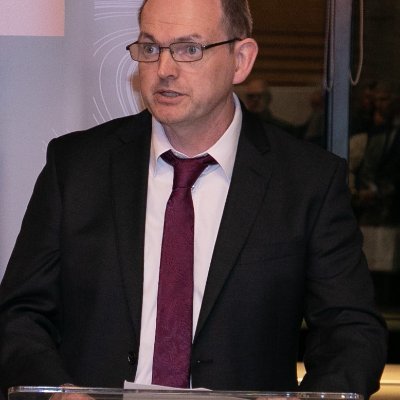
Martin is the current Project Officer for the Oral History Project at the University of Limerick where he also teaches. His research is focused on the visibility of working-class women in the public sphere in England and in Ireland in the late nineteenth and early twentieth century, and the fears moralists had about their exposure to immorality. He is Treasurer of the IAPH, Web Officer of WHAI, committee member of the standing committee of OHNI, and Fellow of the Royal Historical Society. His second book, University of Limerick an Oral History of Limerick, 1972 -2022, was published November 2023.
Membership Secretary:
Dr Deirdre Foley
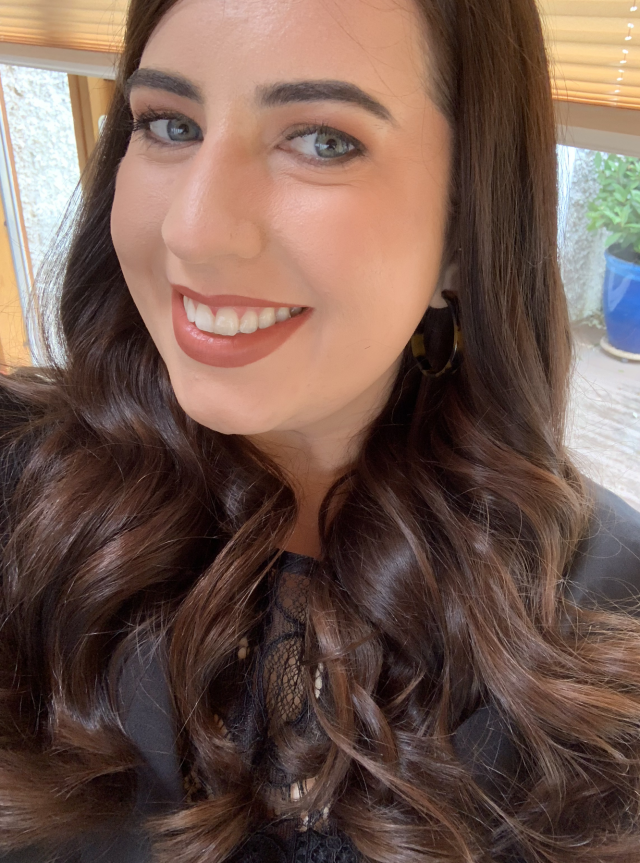
Dr Deirdre Foley is a historian of modern Ireland with a particular interest in the status of women during the twentieth century. She has published widely on women’s work, birth control, family law and Irish political history. A former Roy Foster Irish Government Research Fellow at the University of Oxford, Deirdre subsequently held two Research Ireland postdoctoral awards – the Government of Ireland and the Enterprise fellowships – at University College Cork and Trinity College Dublin.Currently she is Principal Investigator of the Research Ireland Pathway Project, ‘TÚS: Pregnancy and Giving Birth in Ireland, 1950-2020’ at the Department of History, Trinity College Dublin.
ECR Representative:
Dr Susie Deedigan
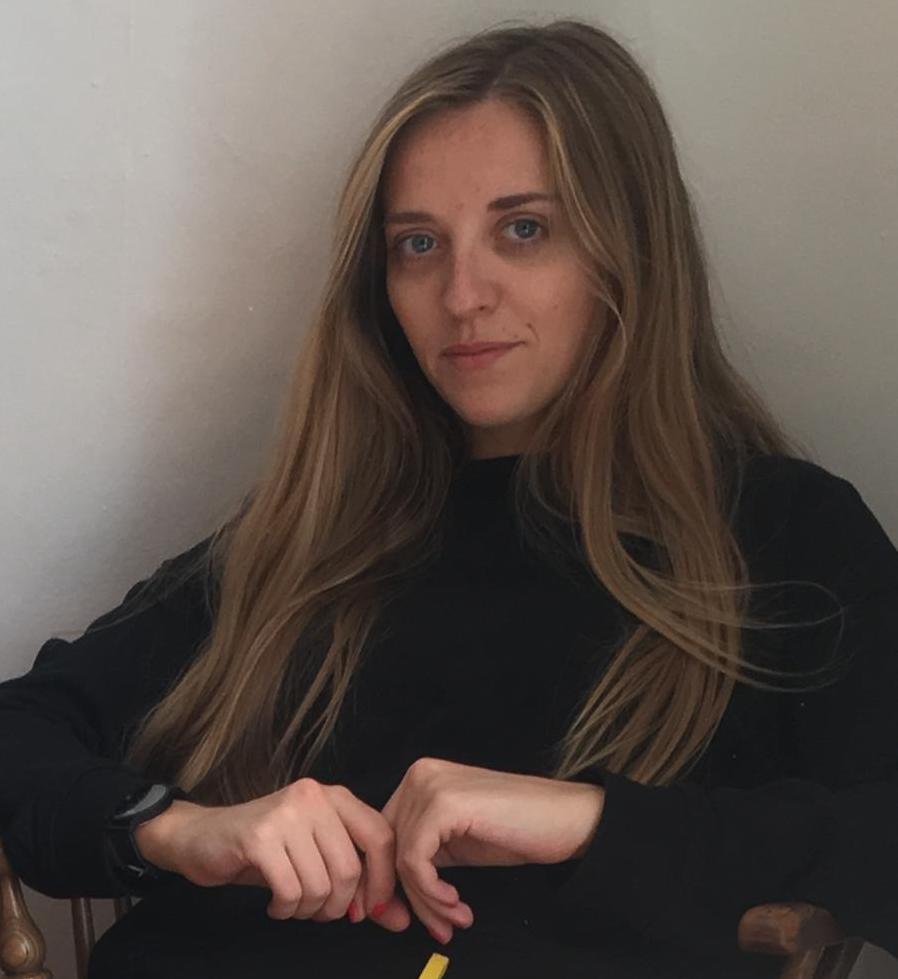
Susie is a PhD candidate at Queen’s University, Belfast. She previously studied at Trinity College, Dublin (MPhil), Balliol College, Oxford (BA) and Sheffield Hallam (PGCE). Her PhD research is funded by a Department for the Economy studentship. It comparatively examines the impact of gender on political imprisonment during the Second World War in Northern and independent Ireland. It considers women’s experiences and explores how lives were changed as a result of imprisonment. It explores the impact of gender on state responses and discusses women’s roles and perception within republicanism.
She has presented widely and contributed to blog posts on many aspects of Irish women’s and gender history. Her previous research has included studies of militancy and Irish suffrage, female activism and trade unionism in the early twentieth century and female associational culture during the Irish Civil War. She previously taught History and English Literature at secondary and FE level in the state sector and is active within a number of initiatives working to widen access to higher education for marginalised groups.
Postgraduate Representative:
Norma Owens
Postgraduate Representative
Lorna Fagan
Independent Scholar Representative
Dr Ciara Henderson
Book Reviews Editor:
Dr Judy Bolger
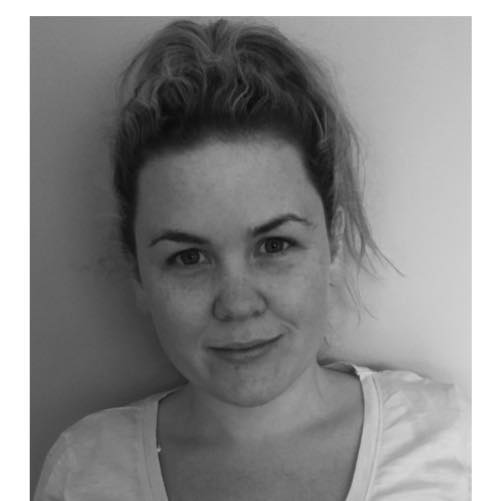
Judy Bolger lectures in Irish History and Academic & Digital Skills at Carlow College, St Patrick’s, where she also serves as Educational Technologist, bringing expertise in digital learning tools and pedagogies to enhance teaching and learning across the College. Judy’s research interests centre on women’s social and cultural history, particularly the experiences of impoverished mothers and infants. She completed her PhD in History at Trinity College Dublin (2025), funded by the Trinity College Dublin 1252 Postgraduate Research Scholarship. Her doctoral research examined motherhood and the workhouse in nineteenth- and early twentieth-century Ireland. Her earlier M.Phil. and B.A. research also explored aspects of nineteenth-century Irish social history, including breastfeeding and reproductive insanity. Judy has presented her research extensively across academic and public history forums and is actively engaged in interdisciplinary networks exploring women’s history, healthcare, and institutional care in Europe. She is a member of the AHRC-funded network ‘Institutions and Infant Care: Foundling Hospitals and Residential Homes for Babies in 20th c. Europe’ and the COST Action ‘EuroHealthHist: National, International and Transnational Histories of Healthcare, 1850-2000’.
Recent publication: “They are not a very good social element even in the workhouse’: The Vice-Regal Commission on Poor Law Reform in Ireland (1906) and the Workhouse Mother’, Socialinė Teorija, Empirija, Politika Ir Praktika, 32 (2025), 76-90. https://doi.org/10.15388/STEPP.2026.32.5
Executive Committee Member:
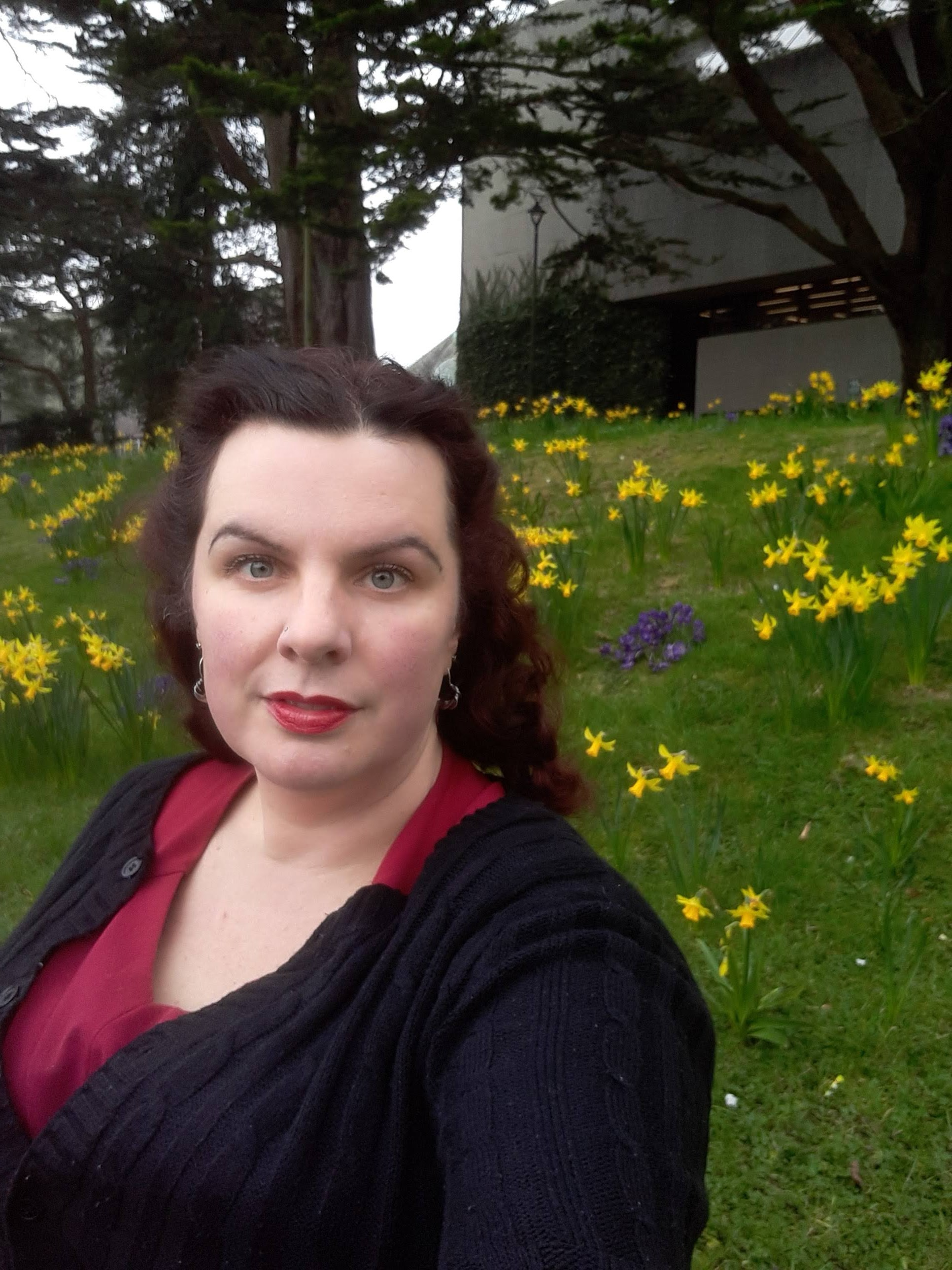
Dr Melissa Shiels
Executive Committee Member
Dr Suzanne Jobling
Executive Committee Member:
Dr Jennifer Redmond
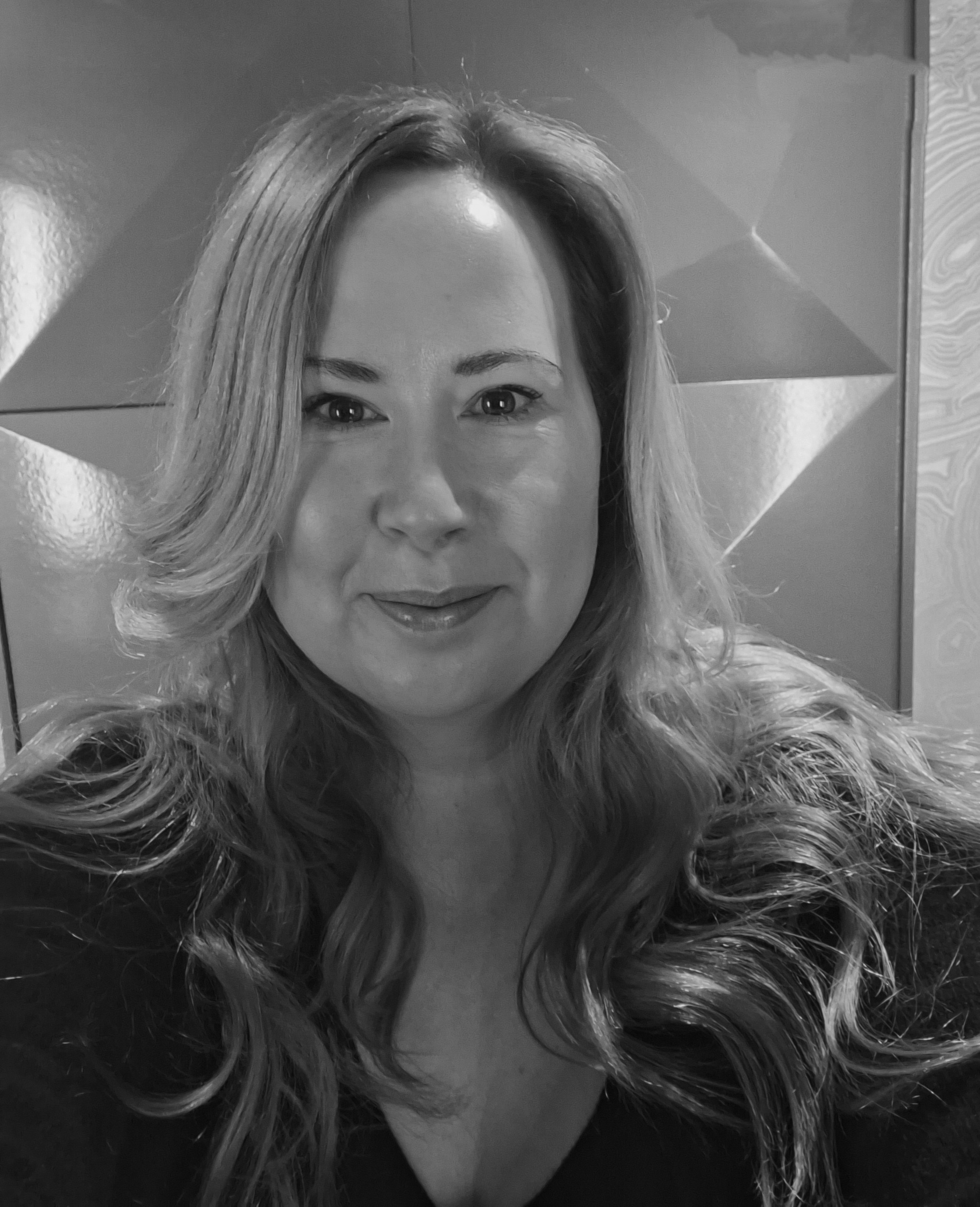
Dr. Jennifer Redmond is Associate Professor in Twentieth Century Irish History in the Department of History at Maynooth University. Her undergraduate degree is from University College Dublin while her M.Phil and PhD degrees are from Trinity College Dublin. Having held postdoctoral positions at Maynooth University, University College Dublin and Bryn Mawr College (USA), she has been a full time faculty member in Maynooth University since 2013. She researchers, teaches and publishes in the areas of women’s and gender history with a focus on identity, citizenship, employment, sexualities and migration. She is the Chair and main proposer of the COST Action HIDDEN: History of Identity Documentation in European Nations which brings together scholars in different disciplines across the EU and its affiliated members to examine issues of identity documentation, migration and citizenship historically and in the present. The network runs from October 2022 to October 2026 and incorporates five thematic Work Groups with public facing as well as academic outputs. Dr Redmond sits on the editorial boards of the leading journals Women’s History Review and Irish Historical Studies and is a member of the editorial team for the Documents on Irish Foreign Policy series published by the National Archives of Ireland and the Royal Irish Academy. She is also an ordinary committee member of the Women’s History Association of Ireland national committee.
Executive Committee Member
Dr Clodagh Tait
Executive Committee Member:
Dr Lyndsey Earner Byrne
Executive Committee Member:
Dr Sophie Cooper

Dr Sophie Cooper is a lecturer in Liberal Arts at Queen’s University Belfast where she has taught since 2021. She is a historian of migration, gender, and religion, with a particular interest in how the built environment was used by Irish migrants in the United States, Australia, and Britain during the nineteenth and early twentieth centuries. Her first book, Forging Identities in the Irish World: Melbourne and Chicago, c.1830-1922, was published by Edinburgh University Press in 2022. It was awarded the Lawrence J. McCaffrey Prize for Books in Irish America by the American Conference of Irish Studies in 2023. Sophie has also published in Women’s History Review, History Compass, and Social History, alongside works in edited collections. She is Secretary of the Ulster Society of Irish Historical Studies.
Executive Committee Member:
Dr Shannon Devlin
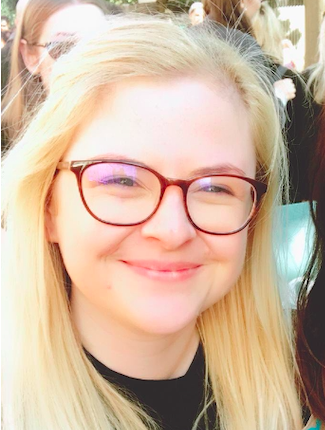
Shannon Devlin is Lecturer in Modern Irish History at University of Galway. She completed her PhD at Queen’s University, Belfast, in 2020, and was Balch Fellow at the Historical Society of Pennsylvania in 2022. Her research interests lie in the Irish family, particularly the often-overlooked sibling relationship. She has published her research in Women’s History Review, Cultural and Social History, and The History of the Family. Her first monograph, entitled Siblinghood and Sociability in Nineteenth-Century Ulster, was published by Liverpool University Press in January 2025. Taking a horizontal perspective, it uses innovative genealogical methodology to explore the gendered expectations placed on brothers and sisters in middle-class Irish society. More broadly, Shannon is interested in how the family shapes identity and social networking in the nineteenth century, attitudes to incest and cousin courtship in Ireland, and the role of family in migration and diaspora. Shannon convenes the ‘Lifecycles, Families, and Communities’ strand of the Social History Society, is an Early Career Fellow of the Royal Historical Society, and Fellow of the Higher Education Academy.
 Women's History Association of Ireland
Very interesting website