
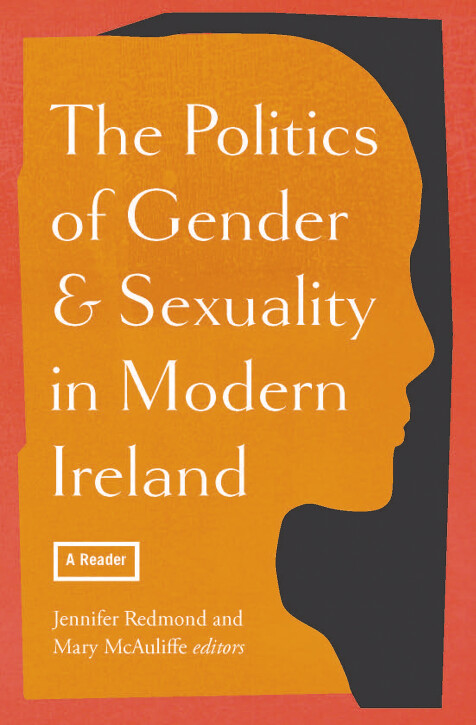
The Politics of Gender and Sexuality in Modern Ireland: A Reader offers a rich, layered exploration of how gender and sexuality have both shaped and been shaped by Ireland’s social and political history from the late 19th century to today. Edited by two leading Irish gender scholars Jennifer Redmond and Mary McAuliffe, this collection brings together a diverse range of voices and interdisciplinary perspectives, making it an essential text for anyone interested in the intersections of gender, sexuality, and Irish history.
The volume is structured thematically, which works well to frame key shifts and conflicts around gender roles, sexual norms, and political struggles in Ireland. It covers everything from the deep influence of Catholicism on sexual morality and reproductive rights, to the waves of feminist and LGBTQ+ activism that have challenged and reshaped Irish society. What stands out is how the book traces the enduring grip of strict state and societal norms—and how these have been resisted, contested, and transformed over time.
Diverse and inclusive perspectives: One of the book’s biggest strengths is its commitment to representing a broad spectrum of experiences. It doesn’t limit itself to the Republic but includes Northern Ireland too, giving a fuller picture of the island’s complexities. There’s strong attention to both women’s rights and LGBTQ+ histories, which together offer a more complete understanding of marginalisation and political resistance in Irish history.
Historical depth meets contemporary urgency: The essays balance detailed historical analysis—from the suffrage movement to mid-century abortion laws—with discussions of very recent milestones like the Marriage Equality referendum in 2015 and the Repeal the 8th campaign in 2018. This temporal scope is crucial for understanding how past struggles feed directly into today’s debates.
Interdisciplinary richness: The book draws from history, sociology, law, and political science, which enriches the analysis. For example, legal histories of reproductive rights sit alongside cultural critiques of Irish literature and media’s role in reflecting and pushing back against gender norms. This multi-angle approach gives a textured sense of how gender and sexuality operate within Irish society.
A few things stood out as limitations. The thematic structure, while useful, sometimes feels a little disjointed—some chapters could benefit from stronger links to one another or a more synthesizing conclusion to weave the themes together. Also, the focus is heavily on political and legal battles, which means everyday lived experiences of gender and sexuality don’t always get enough space. More attention to those personal, quotidian realities would add an important layer.
This reader is a must for anyone invested in how gender and sexuality are politicized in Ireland. It’s not just an academic resource; it’s also a vital toolkit for activists, students, and scholars who want to understand the ongoing fights for equality and rights. The essays remind us that gender and sexuality aren’t private matters but central battlegrounds where power, identity, and resistance are constantly negotiated. The Politics of Gender and Sexuality in Modern Ireland is a compelling, necessary volume that makes visible the struggles, achievements, and ongoing battles around gender and sexuality in Irish history and society. It’s a powerful reminder that understanding these histories is key to shaping a more inclusive future. Whether you’re a scholar, student, or activist, this reader offers vital insights and a solid foundation for further research and engagement.
Biography Aisling Keavey
Aisling Keavey (1991) is a photographic artist, moving-image maker, curator and writer from Dublin, Ireland. Currently based in London, she is a graduate of Dun Laoghaire Institute of Art Design and Technology’s MRes course in Photography (2022, 4.0GPA), in which she reflected on the representation of Irish women in Britain post the Good Friday Agreement, and also Wimbledon College of Arts ’one-of-a-kind (and no longer running) BA course in Fine Art Print and Time-Based Media (2016, 2.1).
She has an intensely research-based practice, which spans photography, archival material, writing and moving image. Her work focuses on the migration of women from Ireland to the UK, using ethnographic interviews, photography and moving image to connect histories of migration with the contemporary.
Recent exhibitions include Dublin Art Book Fair 2022: A Caring Matter at Temple Bar Gallery and Studios, Images Are All We Have and, On The History and Practice of Photography in Ireland, both at PhotoIreland Festival, July – August 2022; and Photo Fringe online 2020.
She has presented academic papers and posters at various national and international conferences, most recently as part of the Deviant Women: Women and the Visual Arts Research Symposium at the University of Bristol, the Sixteenth International Conference on Interdisciplinary Social Sciences The Opportunities of Crisis: Resilience and Change in World History, and Migrant Belongings: Digital Practices and the Everyday. She has won various awards for papers and research, including an Emerging Scholar Award and a Research and Innovation Seed Fund for Emerging Researchers from Dun Laoghaire Institute of Art Design and Technology.
 Women's History Association of Ireland